Observation Before Interpretation
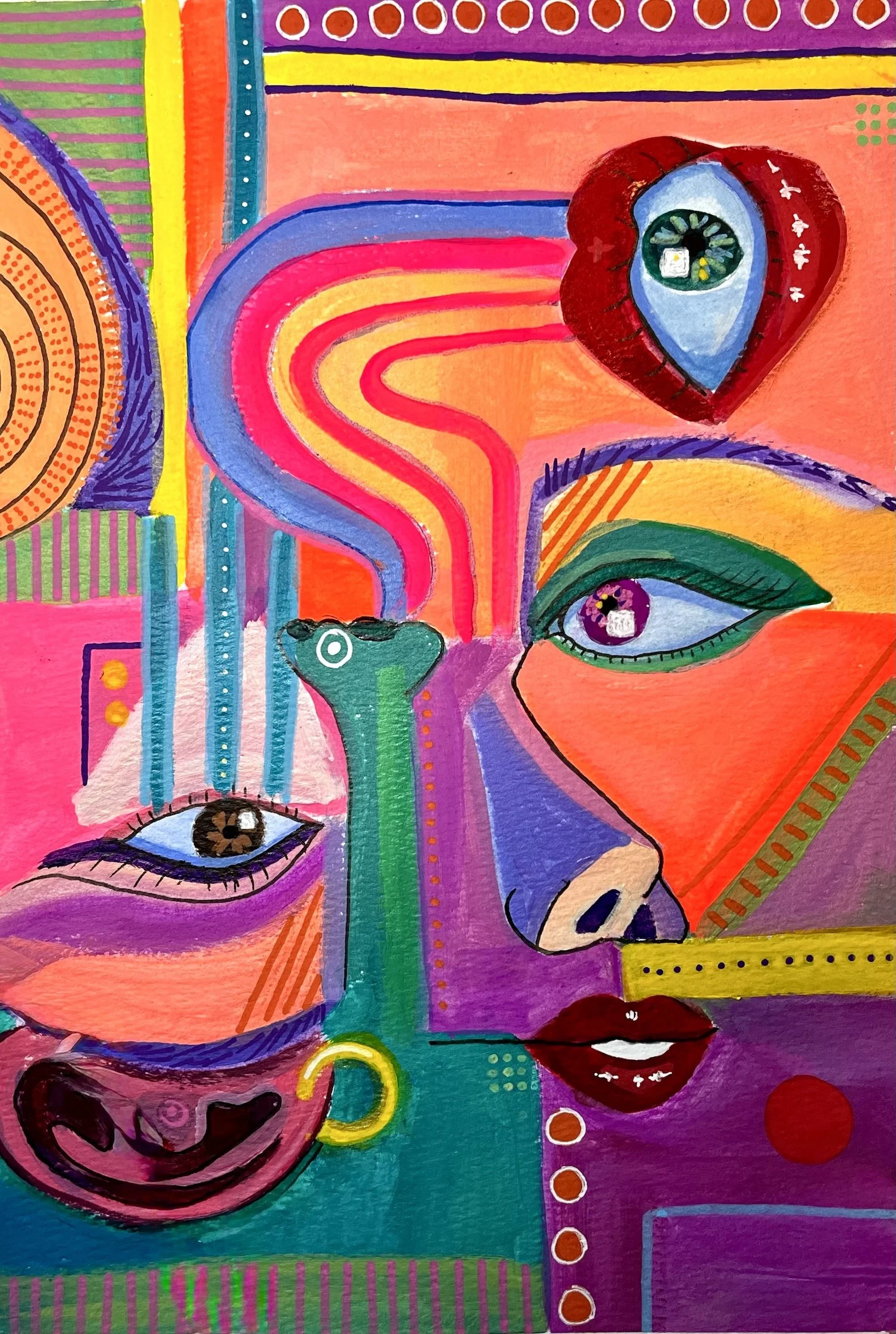
Dreams are complex, often carrying multiple layers of meaning that change over time. A dream that feels confusing at first may reveal something new weeks, months, or even years later as your life changes and your perspective shifts. Part of what makes dream work so fascinating is that dreams don’t exist in isolation. They often reflect what’s happening in our lives, reveal recurring patterns, connect past experiences to present circumstances, or invite us to consider where our current path may be leading. Rather than offering fixed answers, they create an opportunity for reflection.
Over the years, I’ve found myself returning to the same general process when working with my dreams:
Observe > Associate > Reflect > Integrate
Each step builds on the one before it, but the process isn’t always perfectly linear.
Because dreams are so deeply personal, I don’t believe there’s a single “correct” way to interpret them. The approach I share here isn’t meant to be a definitive method but rather a framework I’ve used through years of studying, recording, revisiting, and working with my own dreams. My hope is that it helps you understand your dreams a little more.
Before trying to figure out what a dream means, begin by observing what is actually there. Think of dream interpretation as a game of observation. Look for the who, what, when, where, and how of the dream, and get curious about each detail. Record these observations on the reflection page following your dream entry.
Let’s break it down:
Who?
What characters are present? Do they behave similarly or differently from what you experience in waking life? Do they feel like a mix of people you’re familiar with? How do you feel about the person in waking life compared to in the dream?
What?
What is happening in the dream? What is noticeably out of the ordinary from waking life? What symbols are present in the dream? Asked differently, what do you notice that feels significant? It could be an animal, an object, a place, a phrase someone said, or something that feels connected to a childhood memory. What themes are present? What feels especially strong or emotionally charged? What “knowledge” did you hold that was explicitly named? (Often in dreams there are things you simply have an understanding about even if no one told you or it isn’t actually that way in real life).
When & Where?
Where are you? How does it look similar to or different from waking life? Is this place somewhere you spend time currently, or from a different period of life?
How did you feel in the dream/upon waking?
What emotion stayed with you after waking? Did any emotions change throughout the dream? Did it match what was happening? Where in your life have you felt this emotion recently?
If you get any intuitive insights about what you’re observing, write those down as they come up on your reflection page, but don’t worry too much about what each thing means yet or if it’s “right”. The goal of this step is to simply observe without needing to explain or make sense of what’s happening. You may also notice that none of these questions ask what the dream means, and that's intentional. In my experience, meaning has a way of revealing itself more naturally after you’ve spent time observing what’s there rather than trying to figure it all out at once. Once you've finished this exercise, set the dream aside for a little while. As you go about your day, you may recall new memories, associations, or insights that begin to surface on their own. When they do, jot those down. They’ll be valuable pieces to work with in the next step.
In my next post, we'll take everything you've observed and begin looking at one of the primary ways dreams communicate: through association, metaphor, and the connections your mind makes between seemingly unrelated things.